
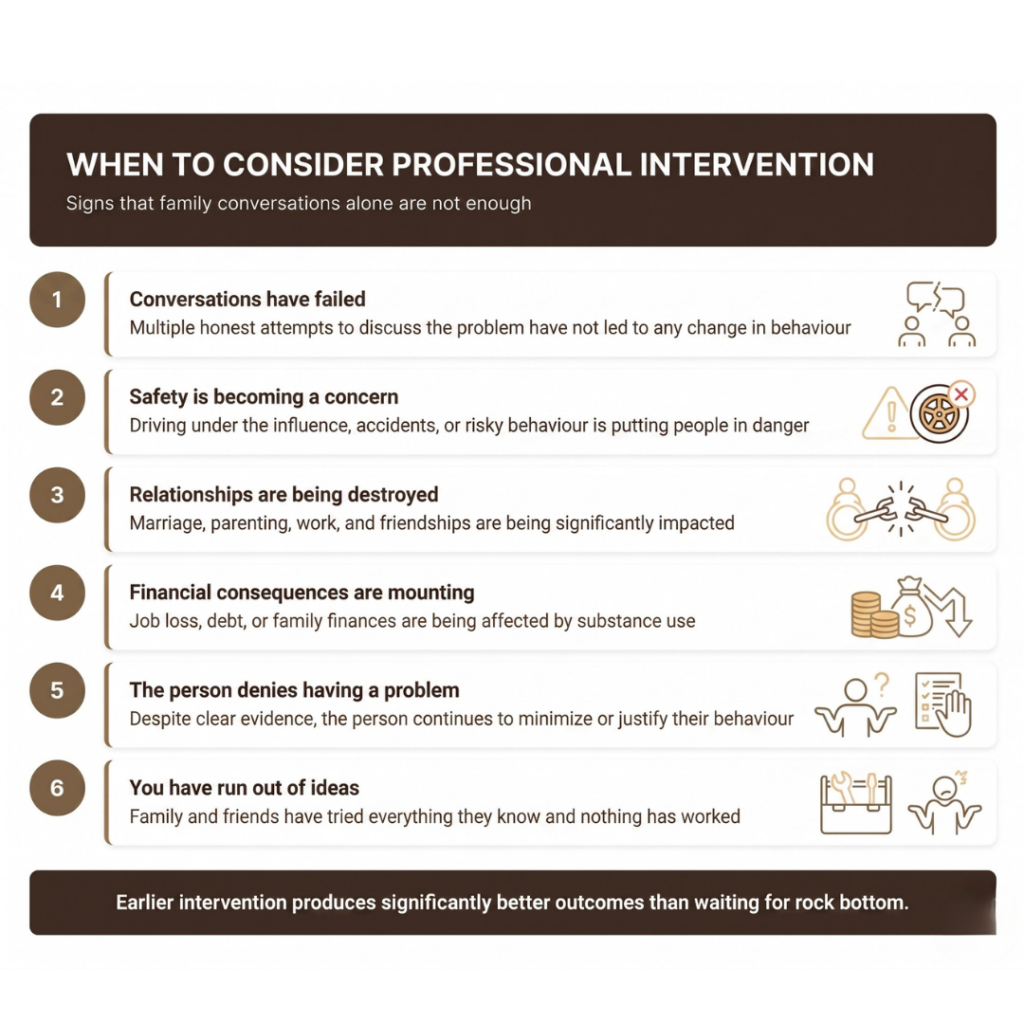
No one prepares you for this. One day you’re a normal family, and then over time, sometimes slowly, sometimes fast, you realize that someone you love has a serious problem with substances. And they don’t see it the way you do.
You’ve had the conversations. Maybe more times than you can count. You’ve pleaded, you’ve threatened, you’ve cried. And nothing has changed. Or things have gotten worse.
This is the reality thousands of families are navigating right now. And most of them are doing it without a real roadmap.
Why Talking Alone Often Isn’t Enough
The first thing most families try is talking. Makes sense. You love this person. You want them to understand what their behavior is doing to themselves and to the people around them.
But addiction changes the brain in ways that affect judgment, self-awareness, and the ability to accurately assess consequences. According to the National Institute on Drug Abuse, substance use disorders alter the prefrontal cortex, the part of the brain responsible for decision-making and impulse control. This isn’t a character flaw. It’s neuroscience.
This is why many people in the grip of addiction genuinely don’t see what’s obvious to everyone around them. And it’s why the well-meaning “if you loved us, you’d stop” conversation often doesn’t land the way you hope.
What Intervention Is (And What It Isn’t)
Thanks to reality television, most people think of intervention as a dramatic confrontation scene where family members take turns reading letters while someone gets defensive and eventually breaks down.
Real intervention is more structured, more compassionate, and far more strategic than that.
A professional intervention is a carefully planned process, usually guided by a trained interventionist, designed to help someone recognize the impact of their behavior and make a clear, informed decision about getting help. The goal isn’t to win an argument. It’s to open a door.
The Role of a Professional Interventionist
A professional interventionist isn’t there to take over your family’s process. They’re there to support it.
Before the intervention, they work with the family to understand the situation, prepare each person for their role, establish what the bottom lines are, and help arrange treatment options so that if the person agrees, there’s somewhere to go immediately.
That last piece matters more than most families realize. One of the most common reasons interventions don’t result in treatment is the gap between agreement and action. Experienced interventionists, like the team at G3 Recovery and Consulting, handle not just the intervention itself but the coordination and case management that comes before and after.
Common Mistakes Families Make
Protecting someone from consequences. Paying their bills, covering for them at work, lying to other family members. This removes the natural pressure that often motivates someone to seek change.
Ultimatums without follow-through. Saying “if you don’t get help, I’m done” and then not following through teaches the person that your words don’t carry weight.
Acting from panic or anger. Confrontations that happen in the heat of a crisis, without preparation, rarely produce the results families want.
Going it alone. Families often wait a long time to bring in outside help. But intervention is a specialized skill set. A good interventionist has seen hundreds of situations like yours.
After the Intervention: What Recovery Looks Like for Families
Here’s something that often surprises families: even when an intervention goes well and treatment begins, the family’s work isn’t over.
The patterns and dynamics that developed around someone’s substance use don’t automatically disappear when they enter treatment. Family members often need support too, through family therapy, Al-Anon, Nar-Anon, or individual counseling.
Programs that include family support and case management as part of their process tend to produce better long-term outcomes because they address the whole system, not just the individual.
One More Thing Worth Saying
If you’re in this situation right now, you already know how exhausting it is. The worry, the anger, the grief, the hope, and then the disappointment again. Getting professional help for your family member isn’t giving up on them. It’s doing the most effective thing available to you.
The people navigating this who do the best are the ones who ask for help early rather than after they’ve been worn down completely.