
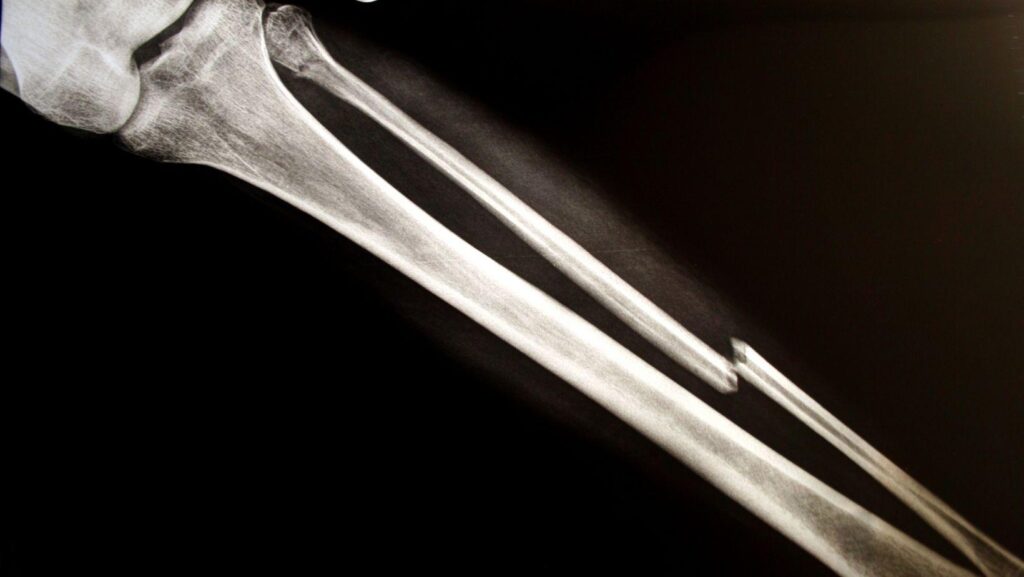
A cast makes healing look passive, like the body is simply waiting around while a fracture slowly reconnects itself on its own. That impression isn't accurate. Underneath the surface, something far more active is happening, involving cells, tissue, and a surprisingly organized rebuilding process.
Bone doesn't just sit still after a fracture. It responds almost immediately, triggering a sequence of biological events aimed at repairing the damage and eventually restoring strength to the injured area. That process unfolds in distinct stages, each building directly on the one before it.
Understanding those stages helps explain why people so often ask how long does it take bones to heal, since the answer depends on more than simply waiting for time to pass. It depends on a genuinely complex biological project happening quietly beneath the skin.
The Body Starts Working Almost Immediately
Within hours of a fracture, the body begins responding. Blood vessels around the break get damaged, leading to bleeding at the fracture site that eventually forms a blood clot known as a fracture hematoma, which becomes the foundation for everything that follows.
That hematoma isn't just leftover damage sitting around passively. It triggers an inflammatory response, bringing specialized cells to the area that begin clearing damaged tissue and setting the stage for new tissue formation. Swelling and tenderness during this phase reflect that active biological process.
This early stage typically lasts several days, and while it might look like simple swelling from the outside, it's actually the opening phase of a much longer rebuilding sequence, one that depends heavily on this initial response happening correctly and completely.
First the Body Builds a Temporary Bridge
Once the initial inflammatory response settles, the body starts forming what's known as a soft callus. This tissue isn't bone yet. It's a softer, more flexible material that begins bridging the gap between the two ends of the fractured bone.
That soft callus serves an important structural purpose even though it's not particularly strong on its own. It stabilizes the fracture site enough to prevent the bone ends from shifting excessively, buying time for the more durable rebuilding process that comes next in the sequence.
This phase generally develops over the following weeks, gradually thickening and stabilizing the area. It's an essential transitional step, one that has to happen properly before the body can move forward into the next, considerably stronger phase of bone repair.
Then the Temporary Fix Starts Turning Into Bone
Eventually, that soft callus begins converting into something closer to actual bone. Specialized cells start depositing minerals into the tissue, gradually hardening the temporary bridge into what's known as a hard callus, a much sturdier structure than the earlier soft tissue.
This hard callus provides significantly more strength and stability, though it's still not identical to the bone's original structure. It's often bulkier and less refined than the surrounding healthy bone, functioning more like a rough patch than a seamless repair at this stage.
This phase can take several weeks depending on the specific bone involved and the individual healing factors at play. By the end of it, the fracture site typically has enough stability to support significantly more activity than earlier stages allowed.
Healing Doesn't End When the Cast Comes Off
Removing a cast often feels like the finish line, but bone healing continues well beyond that point. The hard callus gradually gets remodeled, with the body reshaping and refining the area until it more closely resembles the bone's original structure and strength.
That remodeling phase can continue for months, sometimes longer, depending on the bone and the severity of the original fracture. Bone tissue keeps adjusting internally, strengthening along the lines of stress it actually experiences during normal movement and everyday activity.
This extended timeline explains why full recovery often takes considerably longer than the visible healing suggested by cast removal alone. The bone may look and function normally well before this internal remodeling process has fully finished its work.
Conclusion
Healing time varies considerably from one fracture to another, and several factors influence exactly how long that process takes for any given person. The specific bone involved matters significantly, since some bones naturally heal faster than others based on blood supply and structure.
Age and overall health also play meaningful roles, along with the severity of the original injury and how consistently any recommended treatment gets followed. Blood supply to the fracture site in particular can dramatically affect how efficiently the entire repair process unfolds.
There's no single universal timeline that applies to every fracture equally. What remains consistent is the underlying biological process itself, a genuinely remarkable sequence of repair happening quietly beneath the surface long after the initial injury occurred.