
Your body already knows how to heal. The question with musculoskeletal injuries is whether it has the right signals and the right environment to actually do it. Tendons, cartilage, and joint tissue have notoriously poor blood supply, which limits the natural repair process. Healing stalls, pain lingers, and many people end up cycling through anti-inflammatory medications or injections that quiet the symptoms without addressing the underlying damage.
Platelet rich plasma therapy takes a different approach. By concentrating the body’s own growth factors and delivering them precisely to an injured area, the goal is to restart a healing process that has gotten stuck. Here is a clear look at what the therapy involves, what the evidence supports, and how to evaluate whether it makes sense for you.
What the Therapy Actually Does
Blood is made up of several components: red cells, white cells, plasma, and platelets. Platelets are typically associated with clotting, but they carry something more significant for healing: a concentrated payload of growth factors. These proteins regulate cell activity, stimulate tissue regeneration, and direct the body’s repair response.
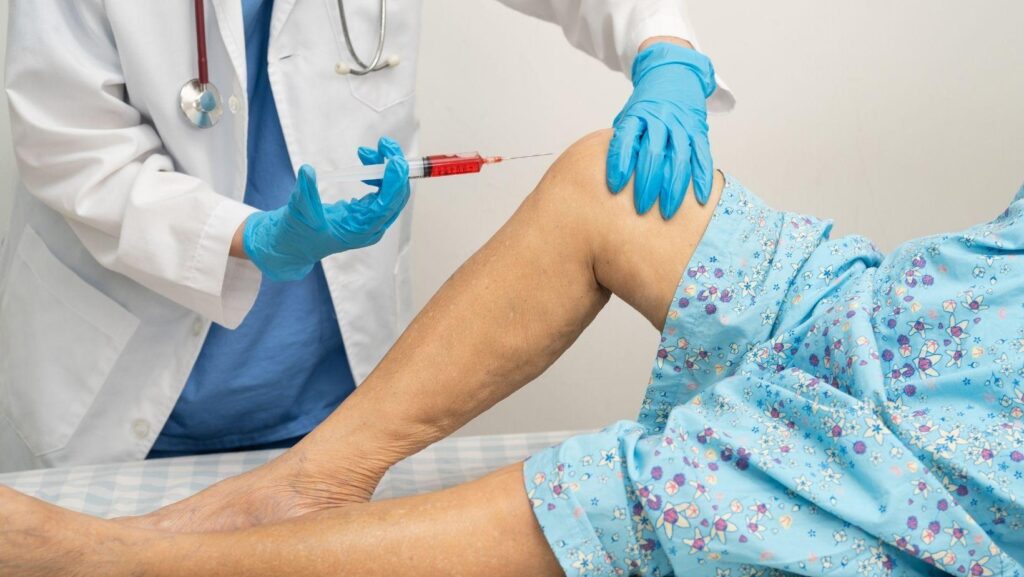
In a platelet rich plasma therapy procedure, a small volume of the patient’s own blood is drawn and placed into a centrifuge. The spinning process separates the components and concentrates the platelets into a much smaller volume of plasma. That concentrated solution is then injected into the site of injury, typically with imaging guidance to confirm accurate placement.
The result is a high concentration of growth factors arriving at a location that the body’s circulatory system has difficulty reaching on its own. Research suggests this can stimulate cellular repair activity, support collagen synthesis, and reduce chronic inflammation by shifting the local tissue environment toward regeneration rather than continued breakdown.
Where the Evidence Is Strongest
PRP has been studied across dozens of conditions, with results that vary depending on the quality of the preparation, the delivery method, and the specific tissue involved. The clearest evidence currently supports its use in several areas:
For spinal applications, sacroiliac joint dysfunction, and nerve-related pain, the clinical evidence is newer but growing. Experienced interventional physicians are using PRP in these areas with increasing frequency as protocols improve.
The Variable That Most Patients Do Not Know to Ask About
PRP is not a standardized product. Two patients can receive treatments labeled identically and end up with preparations that differ significantly in platelet concentration, growth factor content, and delivery precision. This variability is a major reason why published studies sometimes produce conflicting results.
The factors that determine quality include the volume of blood drawn, the centrifuge system used, whether leukocytes are included or excluded based on the target tissue, and how the final product is delivered. Imaging guidance during injection, specifically fluoroscopy or ultrasound, is not universally used but dramatically affects placement accuracy and therefore outcomes.
One interventional physician describes the gap this way:
“Our product is highly concentrated. We always draw at least 60ml of blood to ensure we are working with a sufficient volume of healing cells. The quality and concentration of PRP matters enormously, and that is often where cheaper options cut corners.”
Understanding this variability is important for anyone evaluating PRP as an option. Asking a provider about their preparation protocol, their blood draw volume, and whether they use imaging guidance gives a much clearer picture of what the treatment actually involves.
How It Compares to Conventional Pain Treatments
Standard pain management for joint and soft tissue conditions tends to follow a predictable sequence: rest, physical therapy, anti-inflammatory medications, and corticosteroid injections. Each of these has genuine utility. Cortisone injections in particular can provide meaningful short-term relief and are covered by most insurance plans.
The limitation is that none of these approaches are designed to repair tissue. Anti-inflammatories reduce the body’s response to damage; they do not address the damage itself. Corticosteroids are effective at suppressing inflammation quickly, but repeated high-dose injections can degrade cartilage and weaken tendons over time. Physical therapy rebuilds strength and movement patterns but relies on the tissue being capable of the repair the therapy demands.
PRP works through a different mechanism. Rather than managing the inflammatory response, it attempts to redirect the tissue environment toward regeneration. The comparison one clinician uses is instructive:
“Cortisone is turning off a fire alarm. It quiets things quickly. PRP is more like sending in a repair crew to actually fix what is damaged.”
For patients who want a path that addresses the underlying structural problem, rather than one that manages symptoms while the tissue continues to degrade, the distinction is significant.
The Timeline for Recovery
PRP does not produce immediate relief the way a cortisone injection often does. It initiates a biological process, and that process takes time. Most patients begin noticing improvement somewhere between four and eight weeks post-treatment. Full results, particularly for tendon injuries and cartilage-related conditions, may take three to six months to develop.
This timeline reflects the biology of tissue repair. Collagen remodeling and cellular regeneration are not fast processes. For patients expecting quick relief, the timeline can be frustrating. For patients who are thinking long-term about avoiding surgery or reducing dependence on ongoing medication management, the timeline is a reasonable trade-off.
In terms of session frequency, high-quality protocols often require only a single treatment for straightforward orthopedic injuries. The precision of the preparation and delivery reduces the need for repeat injections. More complex conditions or cases involving multiple areas may involve additional sessions, determined by how the patient responds.
Combining PRP With Other Regenerative Approaches
PRP is frequently used alongside other biologic and non-invasive therapies to support and accelerate the healing response. Shockwave therapy, which delivers focused acoustic energy to stimulate cellular activity and break down calcific deposits, is a common pairing. Laser therapy, particularly systems that penetrate deeply into soft tissue, can also enhance the tissue environment before or after PRP is delivered.
In more complex joint cases, bone marrow concentrate procedures, which concentrate stem cells and additional growth factors from the patient’s own bone marrow, may be used alongside or in place of PRP depending on the severity of the condition and the treatment goals.
These combination protocols reflect the direction regenerative medicine is moving: using multiple biologic signals in coordination rather than relying on any single intervention to do all the work.
Who Is a Realistic Candidate
PRP works best for patients who have a specific structural injury or degenerative process that has not resolved with conservative care and who are interested in a biologic approach to healing rather than symptom management. Conditions that tend to respond well include chronic tendinopathy, mild to moderate osteoarthritis, partial ligament tears, and disc-related spinal pain in appropriately selected cases.
Patients who are on anticoagulants, who have active infections, or who have certain blood disorders may not be appropriate candidates. Anti-inflammatory medications should typically be paused before and after treatment, as they can interfere with the inflammatory signaling PRP depends on to initiate the repair process.
Age is not a barrier. Many patients in their fifties, sixties, and beyond pursue PRP specifically because they want to remain active and avoid the recovery demands and risks associated with surgery. The therapy is applied to the tissue, not the whole body, and the absence of systemic medication means the side effect profile is generally favorable for older adults.
Questions Worth Asking a Provider
For anyone seriously considering PRP, these questions help separate providers with rigorous protocols from those offering it as an add-on service with less clinical structure:
A provider who can answer these with specificity, who reviews imaging before recommending treatment, and who approaches PRP as one tool within a broader clinical assessment is approaching it as a medical decision.
A Genuine Option for Long-Term Recovery
Platelet rich plasma therapy has moved well past the stage of being a fringe or experimental treatment. The evidence base is solid for several conditions, the protocols have matured significantly over the past decade, and the physicians using it most effectively are combining rigorous preparation with imaging-guided precision.
For people dealing with joint pain, tendon injuries, or degenerative conditions who want a path forward that works with the body’s biology rather than around it, PRP represents a meaningful option worth understanding in depth. The conversation starts with finding a clinician whose approach to the preparation and delivery matches the quality of the underlying science.