
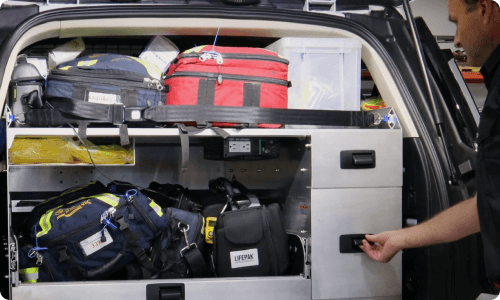
That is why emergency vehicle storage compartments need more than space and basic shelving. A smart layout should support real EMS workflow, reduce unnecessary searching, protect critical equipment, and help crews build consistent habits across the fleet. When every tool has a clear place, responders can move with more confidence and stay focused on the people who need care.
Why Storage Layout Matters in Emergency Response Vehicles
Emergency response vehicles are often smaller and more flexible than ambulances. They may carry medical support gear, PPE, communication tools, scene supplies, chargers, documents, safety equipment and daily-use items.
Because these vehicles have limited space, every compartment should serve a clear purpose. You cannot load equipment wherever it fits and expect the crew to manage it later. A smart layout helps crews use the vehicle faster during real calls.
Start with Crew Workflow, Not Only Vehicle Space
The best layout starts with one simple question: how does the crew actually use this vehicle?
Before choosing compartments, drawers, shelves or secure storage areas, you need to consider the order of use. Consider questions like:
Emergency vehicle storage compartments should support the natural flow of the job. If a supervisor needs quick access to communication tools, those tools should not be kept behind backup supplies. If community paramedicine staff use assessment equipment often, the layout should keep it easy to reach.
Group Equipment by Use
Teams often make one mistake: they group items only by size. Large items go in one spot, small items go in another and soon the whole vehicle feels random. A better method is to group equipment by purpose.
You can organize gear into simple zones like:
It makes the storage system feel more natural. When every zone has a clear purpose, crews do not have to guess where things are. They can open the right compartment and move on.
Keep High-Priority Gear Easy to Reach
Not every item needs the same level of access. Some things are used every day. Others may only be needed once in a while. Your layout should reflect that.
Store high-use gear near the most accessible doors or rear access points. Heavy items should be placed lower when possible to support safer handling. Secure sensitive items properly. Keep quick-access items away from rarely used supplies.
Safety Should Guide Every Storage Choice
Storage is not only about speed. It also affects safety. Loose equipment may shift during travel, especially when a vehicle is used daily in demanding conditions. Secure storage helps reduce movement and supports safer transport of important gear. Secure storage also protects the equipment itself, which matters when teams depend on it during calls.
For Canadian EMS teams, certified, purpose-built emergency response vehicle storage systems can support safer equipment organization, better access, and more reliable daily readiness.
In Canada, Transport Canada’s National Safety Code provides a framework for minimum safety standards related to commercial vehicle operation. For emergency response teams, this reinforces why secure equipment organization, safe storage design, and vehicle readiness should be part of every layout decision.
Durability is another big part of the layout. Emergency response vehicles are not light-use vehicles. Choose drawers, mounts, shelves, and compartments that are built to withstand daily use without becoming loose, noisy, or difficult to operate.
Custom Layouts Work Better for Different Teams
No two teams use their vehicles in the same way. A command officer may need more space for radios, documents and control tools. A community paramedicine team may need organized access to medical support supplies. A supervisor may need a balanced layout for several types of calls.
That is where custom storage adds value. Instead of forcing every vehicle into a single setup, you can design the system around the fleet, the crew and the work.
Custom emergency vehicle storage compartments help teams optimize available space while keeping the vehicle cleaner, safer, and easier to use.
Building Faster Field Response with Smarter Storage
A better storage layout may look like a small upgrade, but it can make a real difference in field work. When crews know where every item belongs, they move with more confidence. Secure gear helps crews keep the vehicle more organized and controlled. When priority items are easy to reach, the response feels smoother.
For emergency response teams using SUVs, supervisor vehicles, command units or community paramedicine vehicles, smart storage is part of field readiness.
If your team needs storage solutions built around safety, durability, and real-world crew workflow, Rowland Emergency can help create a more efficient emergency response vehicle setup.