

Key Highlights
- Shoulder rehab requires control-focused exercises that avoid overload
- Correct form matters more than heavy weights in early recovery stages
- Movements like the dumbbell anterior raise help retrain stability and strength
- A gradual, guided program reduces re-injury risk and builds lasting function
Rehab Is More Than Rest
When recovering from a shoulder injury, it’s easy to assume rest is the safest option. And while initial healing does require downtime, movement plays a key role in recovery once pain subsides. The right exercises—done with control and under the right conditions—help rebuild strength, restore range, and support the joint as it returns to everyday use.
But jumping straight into regular workouts can backfire. The shoulder is a complex joint with high mobility and a history of compensations. This makes it particularly vulnerable to re-injury if progress is rushed or movement patterns haven’t been properly restored.
That’s where strategic rehabilitation exercises come in.
It Starts With Controlled, Low-Load Movement
In the early phases of recovery, high-intensity workouts are usually off the table. What matters most is precision—activating the right muscles in the right order without letting surrounding areas overcompensate. Movements are often slower, lighter and more focused than what you’d do in a typical gym session.
This isn’t about rebuilding mass—it’s about retraining support systems. Postural awareness, shoulder blade control and joint stability are more important than load. That’s why exercises like wall slides, isometrics and shoulder setting drills often appear in the first stages of rehab.
Why the Dumbbell Anterior Raise Helps
One exercise that often finds its way into mid-stage recovery is the dumbbell anterior raise. This movement targets the front of the shoulder—primarily the anterior deltoid—but also encourages coordinated motion through the shoulder girdle and upper trunk.
Performed correctly, it helps rebuild strength in the shoulder’s forward range, supports shoulder flexion mechanics, and builds awareness of shoulder positioning throughout the lift.
What matters here is not just that the arm moves up, but how it does. Controlled tempo, neutral spine alignment, and avoiding shrugging or rotation are all part of what makes the movement effective for recovery.
Form Always Comes First
In shoulder rehab, form matters more than reps or weight. Even a lightweight anterior raise can put pressure on the joint if the technique is off. That’s why this type of exercise is often introduced in front of a mirror or under practitioner guidance—especially early on.
Key things to focus on include:
- Keeping the movement slow and deliberate
- Lifting no higher than shoulder height
- Avoiding momentum or jerky movement
- Making sure the shoulder blade stays controlled and doesn’t wing out
These cues help train the body to share load correctly across supporting muscles rather than forcing it all through one area.
Progression Isn’t Just About Load
Many people assume recovery progresses by increasing weight. But for the shoulder, progression also comes from improving control, range and endurance. That might mean adding holds at the top of a movement, moving through greater angles, or integrating additional joints (like controlled trunk rotation).
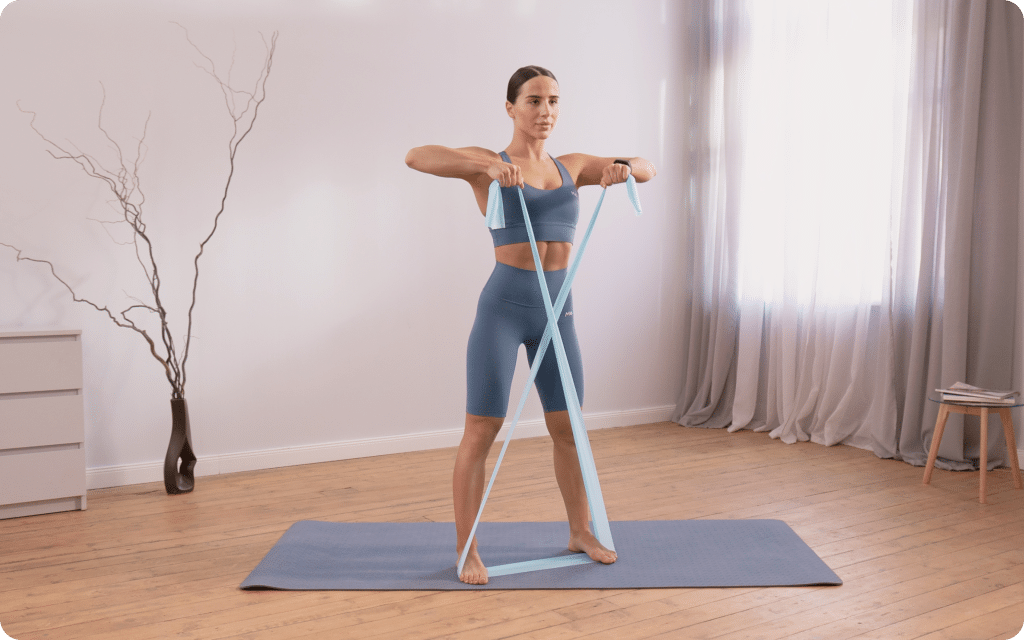
In later stages of rehab, dynamic movements and resistance bands might return. But the base is always the same—reliable control and pain-free range first.
Exercises like the dumbbell anterior raise are ideal here because they scale easily. They can start as bodyweight or banded variations and evolve toward functional resistance training without needing to drastically change form.
When to Introduce Shoulder Strength Work
Timing matters. If your shoulder is still inflamed or painful with basic movements, it’s not ready for resistance work. A good rule of thumb: strength exercises are added only once passive and active mobility feel smooth, and daily tasks can be completed without sharp discomfort.
At that point, structured exercises can begin—ideally with oversight from a physiotherapist or osteopath who understands the demands you’re returning to. Whether that’s manual work, sport, or just carrying a toddler, the rehab process needs to reflect real-world use.
What to Watch For as You Rebuild
Even once exercises are underway, recovery isn’t linear. Fatigue, tightness or compensations can creep back in—especially if you’re returning to work or sport while still rehabbing. Signs you may need to pause or modify include:
- Pain that lingers more than 24–48 hours post-exercise
- Feeling unstable or “clicky” through certain ranges
- Traps or neck muscles taking over during arm lifts
These aren’t setbacks—they’re signals. And the earlier they’re addressed, the smoother your recovery stays.
A Good Shoulder Program Is Always Individual
There’s no universal blueprint for shoulder rehab. Injury history, movement patterns, goals and baseline strength all shape what works best. That’s why working with someone who understands shoulder mechanics—and how to modify based on real-life demands—can shorten recovery time and improve outcomes.
Exercises like the dumbbell anterior raise offer targeted support when used in the right context. Paired with consistent care and progress monitoring, they help make recovery more structured, more achievable, and ultimately more sustainable.