
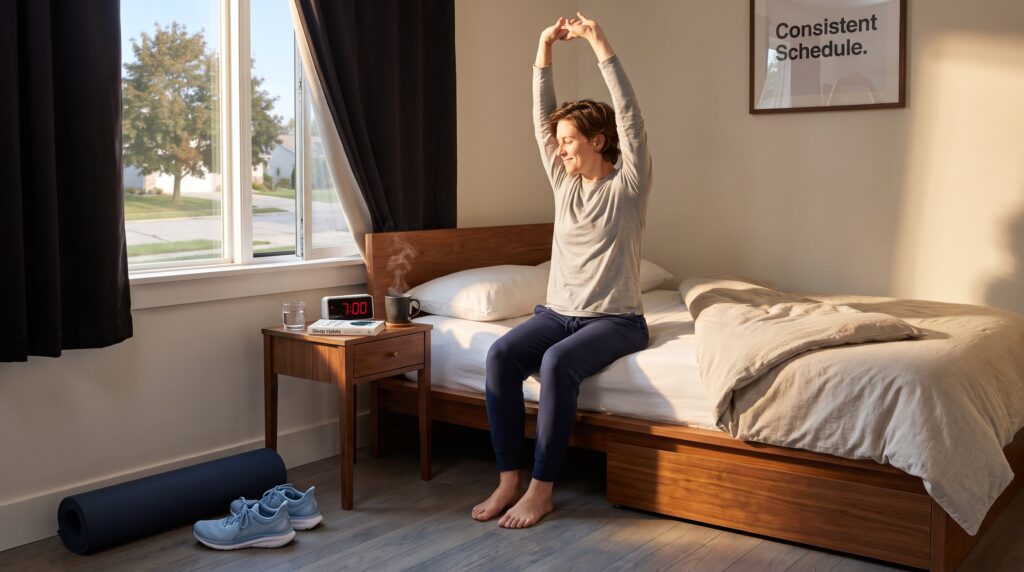
Sleep Better, Live Better: How Sleep Shapes Everyday Well‑Being In 2026 opens a clear case: sleep quality directly shapes daily energy, mood, and performance. The connection between sleep and everyday well-being shows up in the morning coffee someone reaches for, the decision they make at work, and how quickly their sore muscles recover after a run. This article explains why sleep is foundational, how it supports physical and mental health, practical habits to improve sleep, and concrete steps readers can try tonight to feel better tomorrow.
Key Takeaways
- Quality sleep is foundational to everyday well-being, restoring energy, stabilizing mood, and enhancing decision-making.
- Good sleep supports physical health by boosting immunity, aiding muscle recovery, and regulating metabolism.
- Adequate sleep balances REM and NREM cycles, improving emotional regulation and reducing anxiety and depression risks.
- Sleep enhances cognitive functions like memory, focus, and problem-solving while reducing impulsivity and reaction times.
- Practical habits such as maintaining a consistent sleep schedule and creating a cool, dark bedroom environment can significantly improve sleep quality.
- Treating sleep as a nonnegotiable priority yields measurable improvements in daily energy, mood, and overall health.
Why Sleep Is Foundational To Daily Well‑Being
Sleep is foundational to daily well‑being: it restores energy, consolidates learning, and stabilizes mood. When someone sleeps 7–9 hours of mostly uninterrupted NREM and REM cycles, growth hormone peaks, tissue repair happens, and the brain processes emotions. A clear example: a teacher who sleeps seven solid hours reports fewer midday crashes and better classroom decisions than the same teacher after repeated 4‑hour nights. Chronic short sleep raises risks for metabolic dysfunction and weakened immunity, which show up as slower healing and more sick days. Practical takeaway: treat sleep like a nonnegotiable appointment. Small changes, consistent bedtimes and a darker room, yield measurable gains in next‑day alertness and resilience.
Sleep And Physical Health: Energy, Immunity, And Metabolism
Good sleep directly supports daytime energy, immune defense, and metabolic balance. During deep NREM stages, tissues repair and the body releases growth hormone, which aids muscle recovery after exercise. In one concrete scenario, an amateur cyclist who shifted to consistent 8‑hour nights regained 15% faster recovery between interval sessions across six weeks. Sleep loss impairs glucose regulation and alters appetite hormones, leptin falls and ghrelin rises, so someone who sleeps poorly may feel hungrier and store more fat over months. Immune function also falters: fragmented sleep reduces vaccine response and raises infection susceptibility. For readers wanting actionable reading, the site’s guide on ways to solve different sleep problems offers targeted fixes for common physical‑sleep issues.
Sleep And Mental Health: Mood, Stress Resilience, And Cognitive Performance
Sleep powerfully shapes mood, stress tolerance, and thinking. Adequate REM and NREM balance supports emotional processing and neural plasticity: chronic disruption raises anxiety and depression risk. A clear case: someone who sleeps poorly for two weeks often reports more irritability, worse problem solving, and heightened reactivity to small stressors. Below are focused ways sleep affects emotions and cognition and what that looks like in daily life. Those looking for more depth can read the nutrition overview.
How Sleep Affects Mood And Emotional Regulation
REM sleep helps process emotional experiences and stabilizes affect. When REM cycles shorten, people exhibit greater emotional volatility and poorer social judgment. Imagine a manager who, after several nights of fragmented sleep, snaps at a colleague over a minor scheduling error, this is an immediate, measurable effect of disrupted REM processing. Long term, repeated REM loss links with higher rates of depressive episodes. Practical honesty: many try medication or caffeine to push through tiredness: that often worsens sleep architecture and prolongs mood problems. Readers concerned about mood shifts should explore behavioral fixes such as consistent sleep schedules and relaxation routines and consult resources like the site’s review on sleep, melatonin, depression for deeper context.
How Sleep Influences Memory, Focus, And Decision‑Making
NREM supports consolidation of facts and events: REM strengthens procedural skills and creative problem solving. When sleep is truncated, attention lapses increase and decisions tilt toward short‑term reward. A useful example: a chess player who slept well made fewer tactical errors and used more long‑term strategies than after sleep deprivation. Sleep deprivation also slows reaction time, drivers with 18 hours awake manifest impairment similar to a blood alcohol level of 0.05%. To protect cognitive performance, prioritize sleep before critical tasks, and treat naps strategically (short, early‑afternoon naps only). The site’s piece on how everyday routines support stress management explains routine choices that preserve cognitive resources.
Practical Habits To Improve Sleep For Everyday Well‑Being
Start with the most effective, evidence‑based habits: consistent schedule, dark and cool bedroom, and a wind‑down routine. Keep a fixed wake time and bedtime even on weekends: this stabilizes circadian rhythms and improves sleep efficiency. Make the bedroom cool (about 16–19°C) and remove screens, blue light suppresses melatonin. Avoid caffeine after mid‑afternoon and large evening meals: alcohol may help fall asleep but fragments later sleep stages. Limit long late naps and finish exercise a few hours before bed. For people wanting step‑by‑step guidance, authoritative tips on sleep hygiene align closely with medical advice, see the Mayo Clinic’s practical sleep tips for the six core habits. TheHealthyPrimate also offers targeted articles about natural approaches and problem solving: see pieces on integrating natural sleep aids and the role sleep plays in managing depression. A quick, honest warning: many sleep trackers overemphasize time in bed versus sleep quality: focus first on consistency and environment before obsessing over nightly scores.
Conclusion
Sleep is not optional luxury, it is the backbone of everyday well‑being. Small, specific changes to schedule, environment, and evening behavior deliver measurable gains in energy, mood, immunity, and thinking. Readers who want a guided starting point may find the site’s overview on getting to know the blog useful for combining sleep tactics with nutrition and exercise routines. Try one habit tonight, consistent bedtime or screen removal, and measure the difference in three mornings. Real improvement often arrives sooner than expected.