
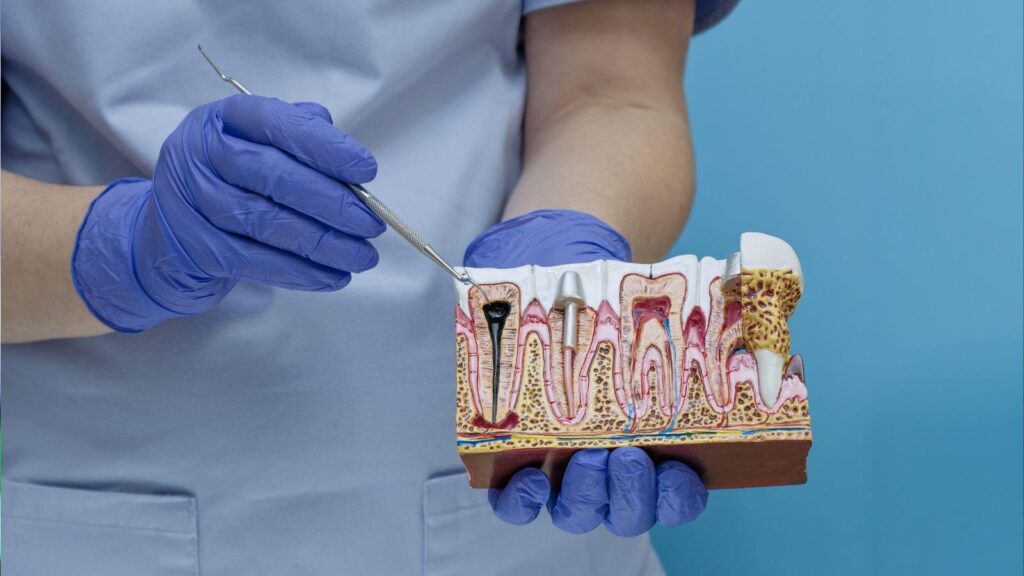
Choosing between one-piece and two-piece implants affects your treatment timeline, comfort during healing, and options for customised prosthetics. One-piece implants simplify the procedure and often shorten treatment, while two-piece implants give more flexibility for complex restorations and adjustment after placement — both available through providers of affordable dental implants in New Market, VA.
You’ll learn how the implant’s structure and surgical approach influence pain, appointments, and long-term maintenance. The next sections explain practical trade-offs, who benefits most from each system, and what to ask your clinician so you can pick the option that fits your needs.
Implant Structure and Placement
You will learn how implant form affects treatment steps, what components connect to create the final tooth, and how the implant bonds with your jaw. These factors influence healing time, prosthetic options, and risk of complications.
Design and Components
One-piece implants combine the implant body and abutment into a single ceramic or titanium piece. That means no separate abutment screw; the visible abutment is integral, which simplifies inventory and eliminates microgap-related bacteria at the implant–abutment interface. One-piece designs limit angulation correction and require precise placement because you cannot modify the abutment position after implantation.
Two-piece implants consist of an implant fixture (buried in bone) and a separate abutment attached by a screw or cement. This modularity lets your clinician select different abutment angulations, heights, and materials for better esthetics and prosthetic fit. The connection type (internal hex, conical, or external) affects stability and microgap behavior.
Surgical Procedures
With a one-piece implant you typically get a single-stage procedure: the implant protrudes through the mucosa immediately and can sometimes receive a provisional crown at placement. That reduces overall surgical visits but increases technical demands—soft-tissue management and precise three-dimensional positioning are critical.
Two-piece implants allow either one-stage (healing abutment exposed) or two-stage (implant buried, then uncovered) protocols. A two-stage approach can protect the fixture during osseointegration and is often used when you need grafting or when primary stability is uncertain. Your surgeon will choose based on bone quality, need for augmentation, and desired timing for prosthetic work.
Integration With Jawbone
Osseointegration depends on surface texture, primary stability, and bone health. Both one- and two-piece implants rely on the same biological process: bone cells grow onto or into the implant surface to form a stable interface. Surface treatments (roughening, coatings) improve early bone contact and reduce healing time.
Because a one-piece implant is exposed to the oral environment during healing, soft-tissue seal quality becomes especially important to prevent bacterial ingress. Two-piece systems present a microgap at the implant–abutment junction that can harbor bacteria if not well managed, but they permit better prosthetic emergence profiles that can favor soft-tissue shaping. Your clinician will balance these factors with bone volume, load expectations, and esthetic demands.
Benefits and Limitations for Patients
One-piece and two-piece implants affect your recovery timeline, how the final tooth looks, and what maintenance you’ll need long-term. Expect trade-offs between surgical simplicity, prosthetic flexibility, and repair options.
Healing and Recovery Experience
One-piece implants usually require a single surgical stage, so you often have fewer appointments and a shorter overall treatment timeline. That can mean less time with open sockets and fewer surgical episodes, which many patients find more convenient.
Two-piece implants typically use a staged approach that separates implant placement from prosthetic attachment. This can extend healing time but allows the surgeon to optimize implant position and soft-tissue shaping before the final crown is placed. You may therefore experience slightly longer total treatment duration but potentially fewer surprises during restoration.
Surgical morbidity is similar for both systems when performed properly, but one-piece implants can limit intraoperative angulation adjustments. That constraint may increase the chance of needing minor corrective procedures if implant positioning is not ideal.
Aesthetic Considerations
If you prioritize immediate provisionalization, one-piece implants often let you attach a temporary restoration at placement, preserving gum contour early. This can benefit front-tooth cases where soft-tissue support and immediate appearance matter to you.
Two-piece implants give your clinician more control over abutment selection and angulation after healing. That flexibility helps achieve better crown emergence profiles and color matching, especially when you have thin gingival biotype or require custom abutments to mask metal or adjust angulation.
Ceramic (zirconia) one-piece implants eliminate metal at the collar, which can reduce gray show-through in thin gums. However, two-piece systems allow hybrid solutions (ceramic abutment on a titanium base) that combine strength with improved aesthetics when needed.
Longevity and Maintenance
Two-piece implants make crown or abutment replacement easier. If a restoration chips or you need a new prosthetic, the separate abutment/crown design usually means less invasive repairs and lower restorative costs over time.
One-piece implants can be harder to repair without removing the entire implant if the prosthetic portion is damaged or improperly positioned. That can increase complexity and cost if you later require a different prosthetic solution.
Both systems show good long-term survival in studies when placed correctly. Your maintenance will focus on daily hygiene and regular dental follow-ups; however, two-piece implants often make professional maintenance and adjustments more straightforward due to interchangeable components.
Suitability Based on Patient Needs
One-piece implants simplify surgery and reduce component interfaces, while two-piece implants offer prosthetic flexibility and easier repair. Your clinical situation, timeline, and esthetic goals determine which trade-offs matter most.
Factors Influencing Choice
Consider these practical factors when deciding between one-piece and two-piece implants:
- Treatment timeline: One-piece implants often allow immediate or early provisionalization because they eliminate abutment connections. Two-piece systems can require staged healing but permit delayed prosthetic loading when bone or soft tissue healing is uncertain.
- Prosthetic flexibility: Two-piece implants let you change angulation and abutment type without removing the fixture. This benefits complex restorations or when you anticipate future prosthetic adjustments.
- Risk of mechanical complications: One-piece implants remove the screw-abutment interface and thus reduce screw loosening risk. Two-piece systems have more components and slightly higher risk of screw or connection issues, but they allow easier component replacement.
- Cost and chair time: One-piece implants can lower lab and chair costs by simplifying components and appointments. Two-piece treatments may incur higher prosthetic costs for custom abutments and additional visits.
Health and Anatomical Requirements
Match implant design to your oral health and anatomy to optimize outcomes.
- Bone volume and quality: Thin crestal bone or limited vertical height may favor one-piece implants when you want to avoid additional component height. Conversely, two-piece implants facilitate use of angled or custom abutments when ridge anatomy requires correction.
- Soft tissue biotype: If you have a thin gingival biotype, two-piece systems let the clinician shape the emergence profile with provisional abutments, improving esthetics. One-piece implants require accurate placement depth and angulation because you cannot later adjust the abutment.
- Medical conditions and healing capacity: If you have systemic issues that slow healing (e.g., poorly controlled diabetes), clinicians may prefer two-piece, staged approaches to reduce early-loading risk. Healthy patients who need fewer visits and predictable healing may be good candidates for one-piece implants.
- Oral hygiene and bruxism: Heavy occlusal forces or bruxism increase mechanical stress. Two-piece implants allow maintenance and component replacement, which can be advantageous; however, careful prosthetic design matters for both systems.