
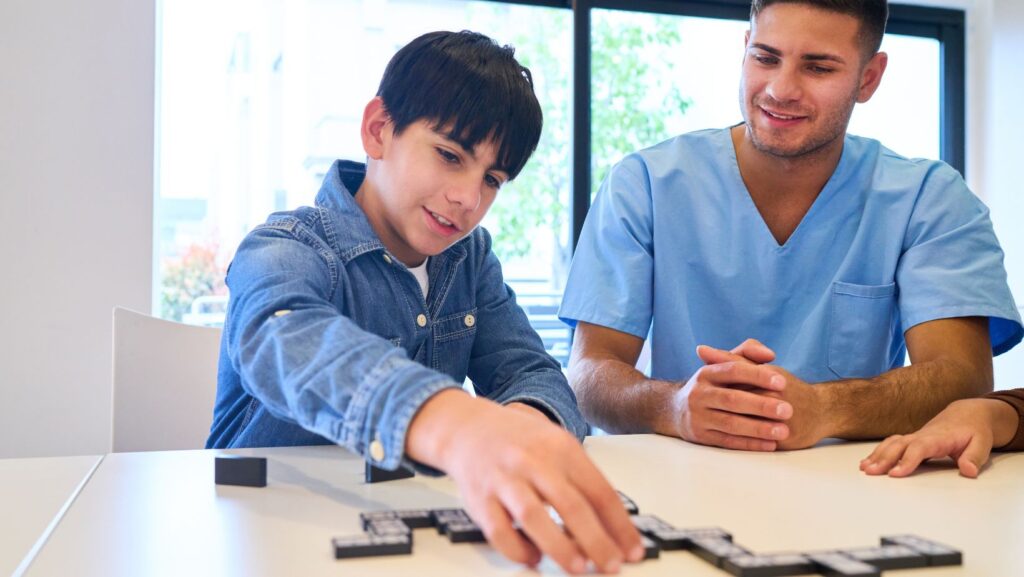
Children who experience severe neglect or frequent changes in caregivers during their first years often develop problems forming emotional bonds. Reactive Attachment Disorder affects how these children connect with others, showing up as either extreme withdrawal or inappropriate friendliness with strangers.
Getting proper treatment makes a real difference in outcomes, though the process takes time and commitment from everyone involved.
How RAD Treatment Works
Reactive attachment disorder treatment differs from typical childhood therapy because it addresses disrupted bonding during critical early development. Children with this condition learned that adults won’t meet their needs reliably. They built protective walls that stay up even after moving to safe, stable homes.
Regular parenting methods don’t work well with these kids. Punishment often makes things worse by confirming their belief that adults can’t be trusted. Treatment has to rebuild their ability to form connections from the ground up.
The younger a child starts treatment, the better their chances of improvement. But older kids and even adults can still benefit. The brain keeps some ability to form new attachment patterns throughout life, though change gets harder with age.
Treatment for Reactive Attachment Disorder in Children
Kids with RAD need specialized therapy that targets the attachment system directly. The best treatment for reactive attachment disorder usually combines several approaches based on what each child needs.
Working With Caregivers and Children Together
Dyadic Developmental Psychotherapy brings kids and their caregivers into therapy sessions as a pair. The therapist guides interactions that help rebuild trust through playful, accepting exchanges. Kids start learning that showing needs gets appropriate responses instead of rejection or neglect.
Child-Parent Psychotherapy works similarly with very young children. Therapists watch how parents and kids interact in real time, then coach better responses. Past trauma affects how kids see current relationships, so this work helps separate past experiences from present reality.
Trust-Based Relational Intervention teaches caregivers specific methods for connecting with children from hard backgrounds. The model recognizes that fear drives most problem behaviors. When parents respond with empathy instead of consequences, kids slowly learn that relationships can be safe.
Teaching Parents New Approaches
Caregivers need training in methods that look different from standard parenting advice:
- Stay calm when kids act out instead of reacting emotionally
- Build predictable routines that create feelings of safety
- Fix relationship problems after conflicts rather than just punishing
- Understand that aggressive or distant behavior usually masks fear
- Give choices within safe limits so kids feel some control
These strategies show children through repeated experience that adults can be reliable. One interaction won’t change ingrained patterns, but consistency over months gradually shifts expectations.
Using Play and Creative Methods
Young kids can’t always talk about their feelings or experiences. Play therapy lets them work through emotions using toys and games. Therapists trained in attachment work create safe spaces where kids explore relationships without pressure.
Through play, children practice new ways of connecting. They might act out scenarios where asking for help leads to getting it. The relationship with the therapist becomes a model for how connections can work.

Art and music therapy serve the same purpose. Drawing, painting, or making music gives kids outlets for complex feelings they can’t verbalize. These activities access emotional material that talk therapy might miss.
Reactive Attachment Disorder in Adults Treatment
People who had early attachment trauma but never got help often struggle with relationships throughout life. Reactive attachment disorder in adults treatment addresses patterns that started in childhood but continue causing problems decades later.
Individual Therapy Options
Attachment-based therapy for adults explores how early experiences shape current relationship patterns. The therapy relationship itself provides practice in trusting someone consistently. Therapists have to maintain steady responsiveness even when clients push them away or test boundaries.
For those seeking specialized care, finding a psychiatrist nyc or other mental health professional with specific training in attachment disorders becomes important, as not all practitioners have expertise in this complex area.
Schema therapy looks at rigid beliefs about self and others that formed as survival mechanisms. Adults learn to spot these patterns and build healthier ways of relating. The work combines thinking about beliefs with emotional processing of attachment wounds.
Adults with RAD often have trouble trusting therapists, which complicates treatment. They skip appointments, resist opening up, or quit when things get uncomfortable. Therapists working with attachment issues need specific training to handle these challenges without taking them personally.
Couples and Relationship Work
Emotionally Focused Therapy helps couples where one or both partners have attachment difficulties. The approach shows how attachment fears drive negative cycles between partners. Learning to respond to vulnerability with support instead of defensiveness creates more security over time.
Some adults benefit from group therapy for relationship practice. But groups can feel threatening when trust is hard. Most therapists recommend individual work first to build enough safety for group settings.
Addressing Trauma Alongside Attachment
Kids with RAD often experienced abuse or witnessed violence on top of neglect. Treating trauma forms part of comprehensive reactive attachment disorder treatment.
Trauma-Focused Cognitive Behavioral Therapy helps process traumatic memories while building coping skills. The structured approach has phases for safety, trauma processing, and future planning. Parents learn in parallel sessions how to support recovery.
Eye Movement Desensitization and Reprocessing helps some people reprocess traumatic memories so they feel less overwhelming. This technique needs specialized training and works best as part of broader treatment that includes relationship repair.
Supporting Families Through the Process
Raising a child with RAD exhausts even experienced parents. The constant rejection and difficult behaviors wear people down. Treatment has to support caregivers or they’ll burn out before the child makes progress.
Caregiver support should include:
- Respite care so parents get breaks from constant demands
- Their own therapy for processing difficult emotions
- Support groups with other families facing similar struggles
- Education about RAD so behaviors make more sense
- Practical self-care strategies for managing ongoing stress
When parents feel depleted, they can’t provide the steady, patient responses kids need. Taking care of the adults matters as much as working directly with the child.
What the Treatment Timeline Looks Like
Families starting reactive attachment disorder treatment need realistic expectations. Kids with RAD spent years learning that people can’t be trusted. Changing those beliefs takes a long time and lots of repeated positive experiences.
Early months focus on building safety and predictability. Kids need stable environments before they can risk connection. This phase often shows little obvious improvement, which frustrates parents hoping for quick changes.
Progress shows up in small ways first. A child might briefly make eye contact instead of avoiding it completely. They might accept a hug once without pulling away immediately. These tiny shifts matter even when big problems remain.
How long treatment takes varies widely. Some kids improve noticeably within a year or two. Others need support through childhood and into their teens. Severity of early trauma, age at treatment start, and consistency of caregiver responses all affect the timeline.
Setbacks happen constantly. Kids might show progress then retreat when something triggers old fears. Parents need support to stay patient through these rough patches without giving up or taking setbacks personally.
What Success Actually Means
Success with RAD looks different than treating other conditions. The goal isn’t eliminating all symptoms but building capacity for connection that wasn’t there before. Even partial improvement changes lives significantly.
Tracking progress requires looking at specific behaviors over time. Does the child seek comfort more often? Do they trust caregivers in small ways they didn’t before? Can they maintain friendships better? These concrete changes show whether treatment is working.
Professional assessments help measure progress objectively. But parent observations matter just as much. They see daily interactions that tests miss. Goals need to fit each child’s situation realistically rather than expecting complete transformation.
With good intervention, many children develop healthier relationship patterns over time. Early neglect leaves some lasting effects, but treatment creates real opportunities for healing. Adults who get help can also improve their relationships substantially, though change usually takes longer than with kids. The work is hard, but outcomes improve enough to make the effort worthwhile for most families who stick with it.