
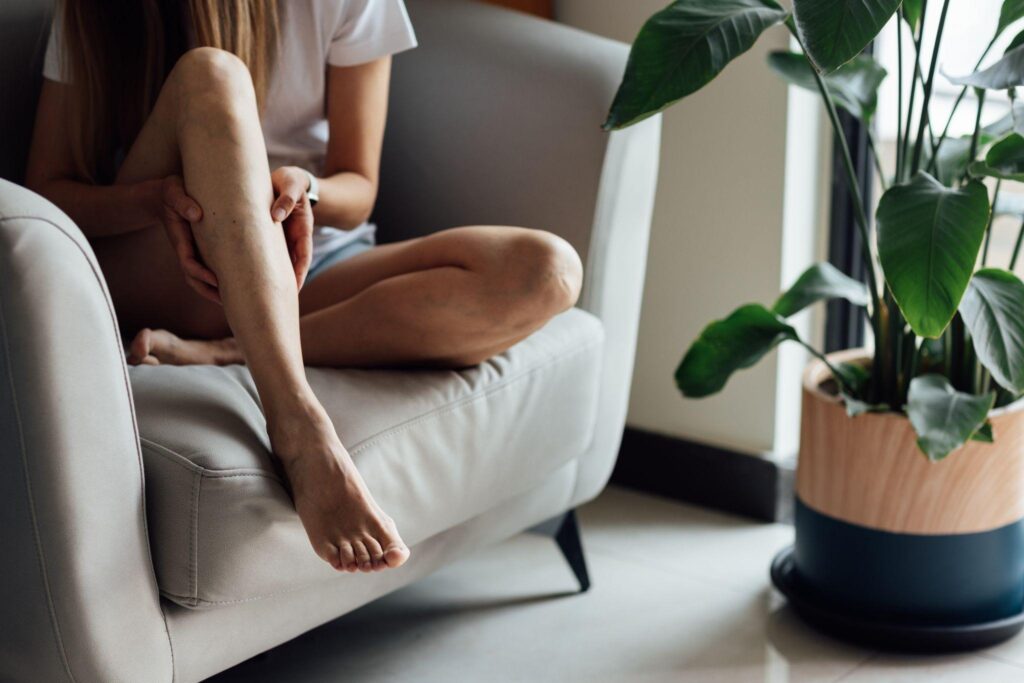
Nobody thinks about their veins until something forces the issue. A pair of shoes that fit fine in the morning won’t go on by evening. A bruise that took three weeks to fade. Ankles that look puffy in a way they didn’t a year ago. These things arrive gradually, and people accommodate them. They buy looser shoes. They stop wearing sandals. They mention the ankle thing to their doctor at some point, maybe.
What they rarely do is connect these developments to the ordinary stuff they’ve been doing every day for years. The sitting. The coffee instead of water. The skipped lunches eaten at the desk while barely moving. Many people who are eventually told they’re dealing with chronic venous insufficiency symptoms look back and realize the pattern was there long before the diagnosis.
What Sitting All Day Actually Does
Eight hours at a desk. Commute home sitting. Sofa in the evening. That’s most people’s Tuesday. The total time spent in sustained immobility would be alarming if anyone thought about it seriously, which almost nobody does.
Leg muscles help push blood upward through your veins when they contract. Every step you take, every time you shift your weight, that muscular action assists a circulatory system fighting gravity from the ankles up. Sit completely still for hours, and that assistance vanishes.
Veins manage alone. Pressure builds inside them. Tiny internal valves that should keep blood moving in one direction start working against sustained hydraulic pressure they weren’t designed to tolerate for that long. The damage isn’t dramatic. A wall stretches slightly. A valve closes a little less completely. Over years of this repeating daily, the slightly stretched wall becomes the wall that’s failing. The valve that closed imperfectly becomes the valve that doesn’t close.
Two minutes of walking every hour interrupts this sequence. That’s it. Not a gym session. Just enough leg muscle activation to restart what sitting suppressed.
The Dehydration Nobody Counts
Office workers are chronically mildly dehydrated, and most of them don’t know it. Coffee in the morning. Maybe a drink at lunch. Maybe not. By three in the afternoon, blood has thickened slightly from fluid loss that wasn’t replaced.
This matters for veins specifically. Thicker blood is harder to move. Valves already working near their limit face more resistance. Vessels that spend years moving viscous blood work harder and wear faster than they should. The relationship between how much water you drink and the long-term state of your vascular tissue is real and mostly ignored.
Daily habits that quietly push veins toward failure:
- Hours of unbroken sitting removing the muscular pump that assists venous return
- Mild but persistent dehydration raising blood viscosity day after day
- High-sodium eating habits that promote fluid retention and raise pressure in leg veins
- Inflammatory diets that compromise vessel wall integrity over years
- Clothing tight around the waist or upper thighs that restricts venous return
- Repeated heat exposure from baths and saunas that fatigues surface vessel walls
The heat one surprises people. A hot bath feels like self-care. It is also repeatedly dilating surface vessels and then letting them constrict. Years of that cycle leaves vessel walls less elastic than they started.
Food Isn’t Just About Weight
The diet-vein connection gets none of the attention the diet-heart connection does, which is strange, because the underlying mechanisms aren’t that different.
Systemic low-grade inflammation damages blood vessel walls. Slowly. Persistently. Years of eating in ways that keep inflammatory markers elevated leaves vessel walls less elastic and less able to repair themselves. A diet built substantially on processed food sustains exactly this kind of background inflammation.
The weight component is mechanical. Each extra kilogram adds to the hydraulic load on leg veins working against gravity. It’s not about impact the way joint damage is. The pressure is just always there, every hour of every day.
What Actually Makes a Difference
Frequent small movements beat infrequent large ones for venous health. An hour of vigorous exercise does real good. An hour of exercise followed by ten hours of sitting doesn’t undo the sitting’s damage. The circulatory system needs movement distributed through the day.
Habits that genuinely protect veins over time:
- Two-minute movement breaks every hour rather than one long workout
- Drinking water consistently without waiting to feel thirsty
- Wearing compression socks during the hours you’re most sedentary
- Shifting toward anti-inflammatory foods that support vessel wall repair
- Elevating legs in the evening to drain what accumulated through the day
- Managing weight gradually to reduce the mechanical pressure load
Compression socks are unfashionable and effective. People who wear them consistently during work hours often describe noticeably less heaviness by evening within a couple of weeks.
Moving Forward
The habits that damage veins are dull. Sitting at a desk. Drinking coffee. Eating lunch in front of a screen. None of it feels like a health decision while you’re doing it. That’s the problem. Vein damage accumulates in the space between decisions that feel consequential and the ones that don’t register as decisions at all. By the time it announces itself, it has been building quietly for a long time. What you do every Tuesday for twenty years is vascular health.
FAQs
What happens if you damage your veins?
Blood pools in the legs instead of returning to the heart. Pressure builds. Over time, that produces heaviness, swelling, skin changes, and in serious cases, ulcers. It compounds if nothing changes.
How do I know if my vein is damaged?
Look for a pattern. Legs heavy by afternoon, ankles swollen by evening, spider veins appearing quickly, skin discoloring around the ankles. Any of these consistently points toward vascular involvement. Ultrasound confirms it.
Can you heal damaged veins?
Valve damage doesn’t reverse. But it stops progressing with the right lifestyle changes, and symptoms often improve noticeably within weeks. Professional treatment helps when lifestyle changes aren’t enough.
What causes damage to veins?
Sustained pressure, mostly. Prolonged sitting, excess weight, dehydration, hormonal shifts, inflammatory diet, genetics. Usually a combination of several things accumulating over years rather than one clear cause.