

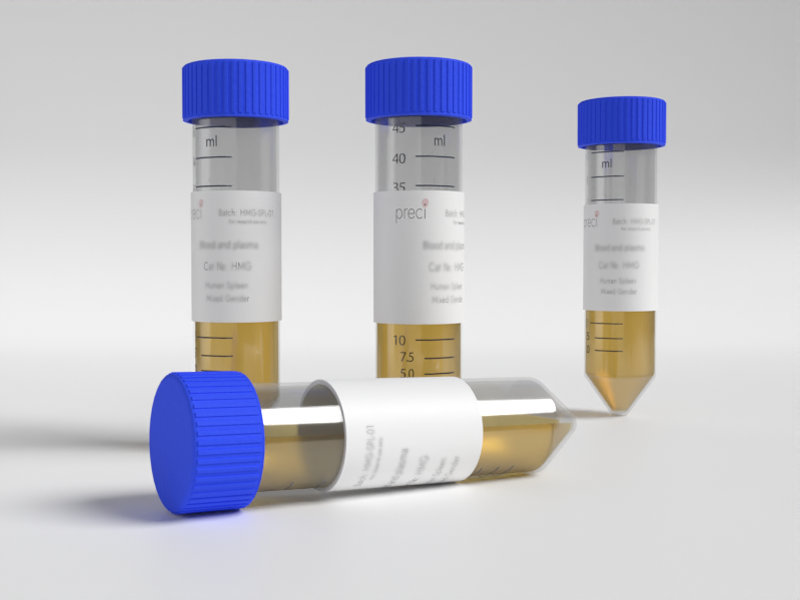
A seemingly simple vial of yellowish liquid often conceals a donor’s long-standing medical history and data that can change the direction of an entire research program. This is why human plasma specimens have long ceased to be mere laboratory reagents. They have become an independent source of knowledge about pharmacology, metabolism, and disease progression.
Human plasma specimens are among the validated human biomaterial samples provided by Preci for preclinical research. Demand for such samples is growing as researchers test more candidate molecules before clinical trials. This trend is also reflected in the broader biobanking sector, which is projected to grow from approximately $86,8 billion to over $160 billion by 2033.
Why Plasma Remains a Key Research Material
Plasma contains proteins, metabolites, hormones, and trace amounts of drugs that reflect the body’s physiological state more accurately than many other biomaterials. For teams studying the pharmacokinetics of a new molecule, plasma enables them to assess protein binding, compound stability, and elimination rate.
However, the results depend directly on the sample’s origin. Plasma from a healthy donor and plasma from a patient with a specific disease yield fundamentally different data for interpretation. This is especially noticeable in the early stages of preclinical programs, when each batch of material effectively sets the coordinate system for all subsequent measurements.
What Problems Do Researchers Solve With Plasma?
The use of human plasma extends far beyond classical pharmacokinetic testing and encompasses virtually the entire drug development cycle. In fact, drug discovery and clinical research together account for more than half (52,8%) of all biospecimen applications worldwide. The experience of laboratories working with candidate molecules at various stages shows that plasma is most often used for the following purposes:
This diversity of applications explains why the same type of biomaterial is in demand by pharmacologists, toxicologists, and diagnosticians simultaneously.
What to Consider When Selecting Plasma Samples
Because the reliability of future results directly depends on plasma quality, researchers have strict requirements for suppliers. Before including a specific batch of samples in a study protocol, laboratories typically check the following features and indicators:
These criteria are especially important for projects where plasma data will later form the basis of regulatory documentation, as any discrepancy between batches can compromise the reproducibility of the entire study.
This is why many laboratories request detailed batch data sheets from suppliers in advance, rather than relying solely on general product specifications. As Dagher (2022) writes in a review of international biobanking standards, high-quality biospecimens “are currently in high demand but can be very limited in availability” (Dagher, Cell Proliferation, 2022).
How Specialized Plasma Formats Expand Analysis Capabilities
In addition to plasma from healthy donors, researchers often require specialized options. Sometimes this material comes from patients with specific diseases. In other cases, it’s samples with controlled characteristics that simulate challenging analytical conditions.
Preci offers similar formats. Among them is plasma from donors with pulmonary pathologies. Researchers use it to study inflammatory and metabolic changes. The line also includes ultrafiltered and modified plasma.
Researchers use these samples when they need to minimize the influence of high-molecular-weight proteins. This allows laboratories to select the material for a specific stage of the study, eliminating the need to adapt the protocol to the supplier’s limited product range.
Human plasma remains one of the most informative and versatile biomaterials for studying new molecules, biomarkers, and disease mechanisms. Its value is determined not only by availability but also by quality: donor traceability, batch stability, and the ability to tailor the format to a specific scientific objective.
The more carefully a laboratory selects its plasma source at the outset of a project, the lower the risk of encountering conflicting data at later stages of development. Ultimately, it is the careful selection of biomaterial, not just the analytical methodology, that determines how convincing the study’s conclusions will be.