
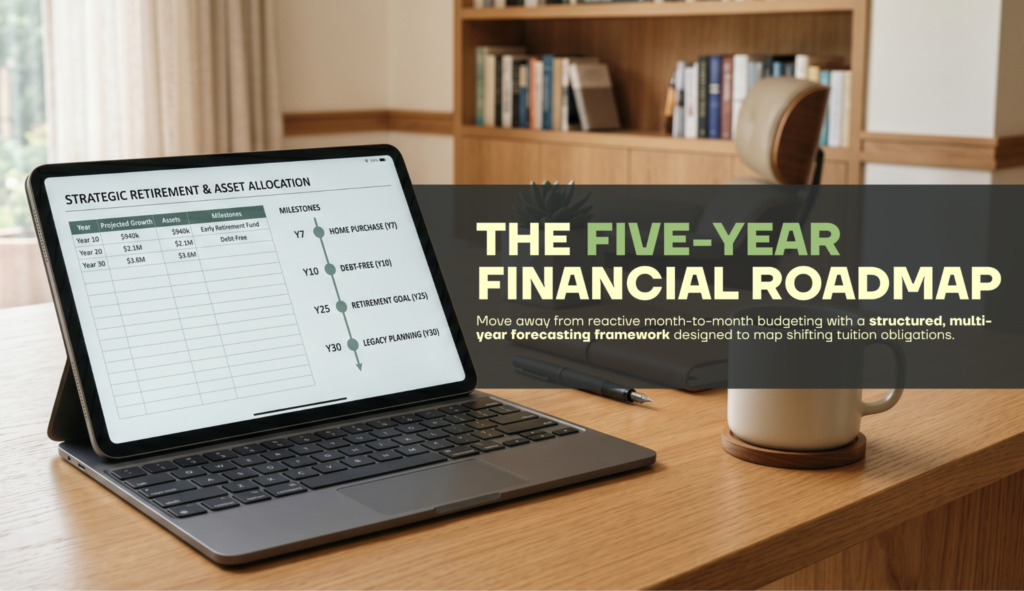
Embarking on the journey of parenthood introduces a sweeping series of lifestyle adjustments, deep emotional milestones, and significant shifts in household financial dynamics. For forward-thinking families, corporate professionals, and highly organized suburban households, managing the multi-year expenses of early childhood education requires moving away from month-to-month reactive budgeting. Many young families find themselves completely caught off guard by the sheer magnitude of early childcare invoices, often because they fail to realize how vastly fees fluctuate based on a child’s age and developmental stage. Treating early learning costs as a static, flat monthly bill makes it impossible to build an accurate, long-term wealth management plan. Utilizing structured digital tools to build a comprehensive childcare planning cost framework provides households with a positive, clear strategic advantage that charts exactly how tuition obligations shift over a five-year period. By mapping out these predictable milestone transitions well in advance, parents can successfully optimize their household cash flow, maximize government subsidies, and maintain complete control over their family finances from infancy all the way to the primary school gates.
To build a truly resilient multi-year childhood budget, you must first understand the strict operational and regulatory factors that drive childcare pricing. Early learning centers do not set their tuition fees arbitrarily; their pricing models are deeply tied to strict government-mandated educator-to-child ratios. Because younger children require far more hands-on, individualized supervision to ensure physical safety and emotional security, the operational overhead for running an infant room is substantially higher than managing a preschool classroom. Recognizing how these ratios alter the pricing landscape allows families to forecast exactly when their childcare expenses will naturally experience a significant financial drop.
The Pricing Peak: Navigating the High Cost of Infant Care from Ages Zero to Two
The initial phase of a multi-year childcare plan covers infancy and toddlerhood, specifically from birth up to approximately two years of age. For working parents returning from parental leave, this era represents the absolute highest financial hurdle in the entire early education timeline.
Regulatory frameworks in most developed regions enforce strict staffing minimums for infants, often requiring a one-to-four educator-to-child ratio for children under twenty-four months. This means that a childcare center must employ a high volume of certified staff members to safely manage a relatively small group of babies. Consequently, daily fees for infant rooms sit at the absolute peak of the pricing spectrum. During these initial twenty-four months, families must be prepared to allocate a substantial percentage of their household income to secure a spot. Understanding that this high-expense phase is temporary allows parents to structure their savings pools and flexible working arrangements to absorb the short-term financial squeeze without disrupting their long-term wealth accumulation goals.
The Financial Relief Zone: Budget Reductions in the Preschool and Kindergarten Years
As a child celebrates their second birthday and transitions into the three-to-five age bracket, families enter what financial planners refer to as the childcare relief zone. This developmental milestone triggers a massive shift in room placement, daily learning structures, and room-wide staffing requirements.
For children aged three and older, government regulations allow for much larger group sizes per educator, often expanding the mandatory ratios to one-to-ten or even one-to-fifteen depending on local legislation. Because a single early childhood teacher can safely supervise a larger cohort of preschool students, the operational labor cost per child drops dramatically for the center. Savvy practices pass these operational savings down to consumers through lower daily tuition rates. Furthermore, many regions provide specialized government funding or free kindergarten hours for children in the year or two before they start primary school to encourage school-readiness programs. This double benefit of relaxed ratios and targeted subsidies creates a significant drop in out-of-pocket expenses, freeing up valuable household capital that can be immediately redirected toward other family savings goals.

Structural Comparison: Financial Outlays and Staffing Ratios by Age Bracket
Evaluating the direct correlation between childhood age milestones, staffing ratios, and overall budget allocations highlights how early learning expenses naturally decline over time.
- Infant Care Stage (Ages 0 to 2): Requires an intensive 1-to-4 staffing ratio, resulting in peak daily tuition costs and a heavy reliance on maximum subsidy brackets.
- Toddler Transition Stage (Ages 2 to 3): Utilizes a moderate 1-to-5 or 1-to-8 staffing ratio, leading to a slight stabilization of daily fees as physical independence increases.
- Preschool and Kindergarten Stage (Ages 3 to 5): Features an efficient 1-to-10 or 1-to-15 staffing ratio, delivering the lowest baseline tuition rates alongside specialized school-readiness grants.
- Outside School Hours Care Stage (Primary School+): Operates on minimal localized care ratios, resulting in a dramatic drop in overall education care costs to just a fraction of early childhood levels.
By carefully studying this predictable multi-year trajectory, suburban households can easily avoid financial anxiety, knowing exactly when their cash flow will open back up as their children grow.
The Primary School Pivot: Budgeting for OSHC and Vacation Care Programs
The final major transition in the five-year childhood budget plan occurs when a child officially moves out of full-time early learning centers and passes through the gates of primary school. While many parents assume that entering public or private primary school marks the complete end of child-related care costs, this milestone actually introduces a new, highly specific set of budgeting considerations.
The standard primary school day typically runs from nine in the morning until three in the afternoon, creating a massive scheduling mismatch for corporate professionals who work standard business hours. To bridge this gap, working households must factor in the ongoing costs of Outside School Hours Care, which includes both Before School Care and After School Care programs. While these programs are significantly cheaper than a full day of infant care, they remain a recurring monthly expense that must be tracked. Additionally, parents must account for the financial reality of school vacation care programs. School holiday terms leave roughly ten to twelve weeks of the year completely open, requiring working parents to budget for full-day holiday activity camps to ensure continuous, safe care while they fulfill their professional duties.
Maximizing Government Subsidies and Tax Frameworks for Capital Retention
An essential component of executing a successful five-year childhood financial strategy is the proactive optimization of available government childcare subsidies and rebate programs. Childcare subsidies are rarely a simple, flat payout; they are dynamic financial structures calculated using a complex sliding scale based on combined family income and verified activity levels.
Failing to report changes in household earnings, altering your working hours, or miscalculating your annual tax return can result in sudden, painful subsidy recalculations or unexpected debts at the end of the financial year. Forward-thinking parents work closely with their financial planners to project their estimated annual income accurately, ensuring they receive the precise level of government fee relief they are entitled to. Additionally, maximizing these subsidies during the high-cost infant years, and carefully reassessing your bracket standings as tuition rates drop in the preschool years, ensures that your family retains the maximum amount of hard-earned capital within your household investment accounts.
Conclusion: Securing Your Family’s Multi-Year Financial Legacy
Constructing a clear, five-year financial roadmap from the cradle to the primary school playground is one of the most empowering steps a household can take to protect its long-term financial security. Allowing yourself to be blindsided by the high cost of infant care, or failing to plan for the unique logistical expenses of primary school holiday care, creates unnecessary emotional tension and severe cash flow disruptions.
By understanding the underlying mathematics of childcare budgeting, you can turn a potentially stressful financial obligation into a perfectly predictable, managed investment. This comprehensive management approach acknowledges the peak expenses driven by infant room staffing ratios, capitalizes on the natural fee drops that occur during the preschool years, and establishes a secure financial buffer to handle outside school hours care once primary school begins. Take complete control of your household budget today, eliminate the anxiety of unpredictable educational expenses, and build a stable, prosperous foundation that allows your career and your family to thrive side by side.
____________________________________________________________________________
Steven Lagrimas is a freelance writer specializing in STEM, business, health, politics, and the social sciences. His work explores the intersection of society, governance, innovation, and emerging global trends shaping communities and industries today.