
You finish your last set of squats, drop the barbell, and immediately scan the gym for your shaker bottle. You have maybe 20 minutes left in the so-called anabolic window. Miss it, and your workout was wasted — or so you’ve been told. You chug your protein shake in the locker room, racing against a clock that supposedly controls whether your muscles grow or not.
Except the research tells a different story. The frantic rush to consume protein immediately post-workout is rooted more in supplement marketing than in science. What actually drives muscle growth is simpler, less urgent, and far more forgiving than the 30-minute window myth suggests.
The Anabolic Window Myth: Where It Came From
The idea that you must consume protein within 30 minutes of finishing your workout originated in bodybuilding circles decades ago. Early studies examining protein synthesis after resistance training often used subjects who trained in a fasted state — meaning they hadn’t eaten for hours before their workout. In those conditions, getting protein into the system quickly did show benefits. The problem is that most people don’t train fasted, and the findings were extrapolated far beyond their original context.
Supplement companies latched onto the concept. The urgency sells products. If you believe your muscles will waste away unless you drink a shake within minutes of leaving the gym, you’ll buy more protein powder and never leave home without it. The message worked. An entire generation of lifters internalized the idea that timing was just as important as the protein itself.
What got lost in the marketing was nuance. The early research wasn’t wrong — it just didn’t apply to everyone, and it certainly didn’t prove that missing the narrow window meant missing gains.
What Research Actually Shows About Protein Timing
When you look at the full body of evidence, total daily protein intake emerges as the primary driver of muscle growth. A 2013 meta-analysis published in the *Journal of the International Society of Sports Nutrition* found that protein timing had minimal impact on strength and hypertrophy when total daily protein intake was adequate. The studies that did show timing benefits often involved participants who weren’t eating enough protein overall — in which case, any additional protein at any time would have helped.
The anabolic window is real, but it’s much wider than 30 minutes. After a workout, your muscles remain primed to absorb and use protein for at least four to six hours. If you eat a meal with protein a couple of hours before training, that protein is still circulating in your system during and after your session. Your body doesn’t reset to zero the moment you finish your last rep.
If you eat protein before training, you extend the availability of amino acids throughout your workout and into the recovery period. A meal with 25 to 40 grams of protein consumed one to two hours before lifting means you’re already delivering the building blocks your muscles need. Adding another dose immediately post-workout won’t hurt, but it’s not as urgent as it would be if you trained fasted.
Consuming protein after training is convenient and may provide marginal benefits, especially if it’s been several hours since your last meal. But if you had a solid meal two hours before the gym and you’re planning to eat again within a few hours, the post-workout shake is optional. Your muscles are not going to atrophy because you waited 90 minutes instead of 30.
Total Daily Protein: The Real Priority
The research consistently points to one conclusion: hit your total daily protein target, and the rest is fine-tuning. For most people focused on building or maintaining muscle, that target sits between 1.6 and 2.2 grams of protein per kilogram of body weight per day. If you weigh 80 kilograms, you’re aiming for roughly 130 to 175 grams of protein spread across the day.
Spreading that protein across multiple meals — typically three to five — optimizes muscle protein synthesis better than eating most of your protein in one or two large meals. Each time you consume 25 to 40 grams of protein, you stimulate a round of muscle protein synthesis. Wait a few hours, and your body is ready for another stimulus.
Quality matters as much as quantity. Complete protein sources that contain all nine essential amino acids support muscle growth more effectively than incomplete sources. Whole foods like chicken, fish, eggs, and dairy provide complete proteins, as do high-quality supplements. For convenience and portability, products like grass fed whey protein deliver a full amino acid profile without added fillers. Combine these with whole food sources throughout the day, and you’ll meet your targets without overthinking timing.
Start with your body weight in kilograms. Multiply by 1.6 if you’re in maintenance mode or training at moderate intensity. Use 2.0 to 2.2 if you’re in a calorie deficit, training intensely, or trying to maximize muscle growth. Round to a practical number and track your intake for a few days to see where you actually land.
Divide your total daily protein into three to five servings. A straightforward approach: breakfast with 30 to 40 grams, lunch with 30 to 40 grams, dinner with 40 to 50 grams, and one or two snacks with 20 to 30 grams each. If you train mid-morning, make sure one of those meals falls a couple of hours before or after your session. If you train in the evening, dinner covers your post-workout needs.
When Protein Timing Might Actually Matter
Timing moves from optional to useful in a few specific scenarios. Elite athletes training twice a day with only a few hours between sessions may benefit from prioritizing protein immediately after the first workout to kickstart recovery before the next one. If your sport or training schedule demands that kind of intensity, tighter timing windows make sense.
If you train first thing in the morning without eating, getting protein shortly after your workout — or ideally before it — helps compensate for the fasted state. A 2017 study in the American Journal of Physiology-Endocrinology and Metabolism found that consuming protein before fasted training increased muscle protein synthesis more than waiting until afterward. The difference isn’t massive, but if you’re training on an empty stomach regularly, a pre-workout meal or shake is worth considering.
Older adults may also see benefits from distributing protein evenly across meals. Muscle protein synthesis becomes less efficient with age, so spacing out protein intake helps maintain muscle mass more effectively than loading most of your protein into one meal.
Finally, if your total daily protein intake is low — say, under 1.2 grams per kilogram — then timing starts to matter more because every feeding opportunity counts. But in that case, the real fix is eating more protein overall, not obsessing over when you eat it.
Practical Takeaways: Simplifying Your Protein Strategy
Stop watching the clock after your workout. Focus instead on hitting your total daily protein target consistently. That consistency — day after day, week after week — drives results far more than optimizing a 30-minute window ever will.
Distribute your protein across three to five meals. This keeps muscle protein synthesis elevated throughout the day and makes it easier to reach your total without forcing down a massive steak at dinner.
If it’s convenient to have protein around your workout, do it. If your schedule makes that difficult, don’t stress. As long as you’re eating protein regularly throughout the day, your muscles have what they need.
Build a default meal structure that works with your schedule. If you train at lunch, pack a protein-rich breakfast and plan a solid dinner. If you train in the evening, make sure lunch and an afternoon snack cover your bases. The goal is a routine you can maintain without constant adjustment.
Here’s what 160 grams of protein looks like across a day:
– Breakfast: 3 eggs, 1 slice of toast with peanut butter (25g protein)
– Mid-morning snack: Greek yogurt (20g protein)
– Lunch: Grilled chicken breast with quinoa and vegetables (40g protein)
– Post-workout or afternoon snack: Protein shake (25g protein)
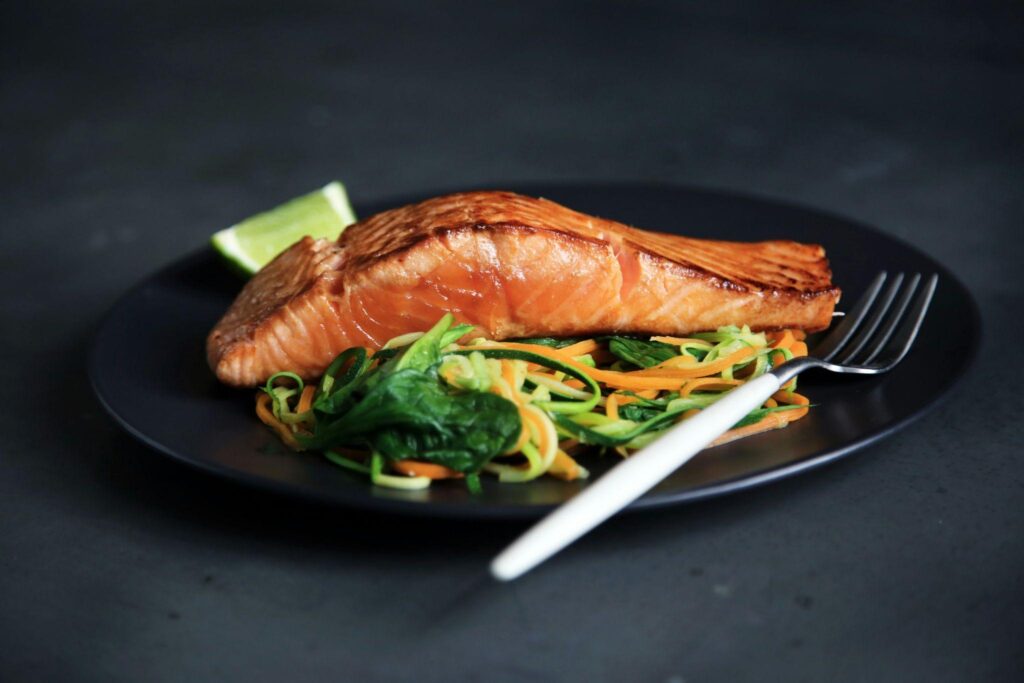
– Dinner: Salmon with sweet potato and greens (40g protein)
– Evening snack: Cottage cheese (10g protein)
You can shift these meals around your training schedule without losing effectiveness. The total and the spread matter more than the specific timing.
Chasing the perfect post-workout window adds stress without adding results. Hit your daily protein target, spread it out reasonably, and train consistently. That’s the foundation. Everything else is margin — and for most people, margins don’t move the needle the way the basics do.