
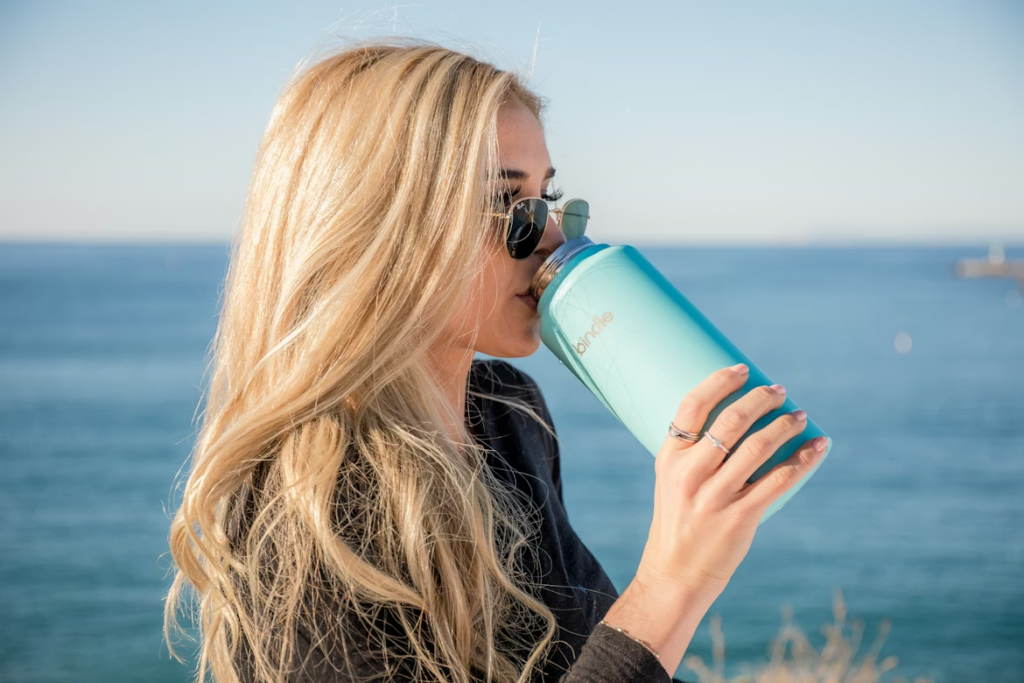
It’s no secret everyone should drink more water.
But few understand just how much drinking enough water each day impacts skin appearance, texture, and aging.
Truthfully…
Water consumption has one of the strongest relationships with skin health out there — but it’s seriously underrated in both the wellness world and amongst productivity circles.
Here’s what you’ll learn:
- How hydration and performance are connected
- Exactly what dehydration does to your skin
- The science behind why hydration matters
- How much water is enough water?
- Simple habits that make drinking water easy
Hydration and Productivity Are More Connected Than Most People Realize
Water consumption doesn’t just help the skin stay moisturised.
Daily water intake also plays a massive role in focus, energy, and mental clarity. Water helps control the physical signs of stress, and dehydration can leave the body tired and cranky. This means hydration has a direct impact on performance levels throughout the day.
The human body is made up of around 60% water — and so is 73% of the human brain! That’s why even mild dehydration can affect everything from concentration to how skin looks and feels.
In fact, just 1% of dehydration can impact worker productivity by around 12% — and that level of dehydration is reached regularly because bodies don’t signal thirst until approximately 1% water-deficient.
A study done by the National Library of Medicine found that inadequate hydration led to a significant loss in productivity among workers. Similarly, Brita detailed the healthcare workplace hydration statistics to highlight that most people don’t drink enough water, and when they don’t, it harms productivity levels and general wellness.
When hydrated:
- Brain function is heightened
- Energy levels aren’t depleted as quickly
- Skin cells regenerate faster
- Toxin elimination increases through sweat
Ultimately drinking enough water each day is a super helpful productivity hack that doubles up as a skin health hack.
While drinking enough water is essential, many people also incorporate electrolyte hydration support into their daily routine to help maintain proper fluid balance, especially during exercise, hot weather, or other situations that increase fluid loss.
Your Skin Suffers When You Don’t Drink Enough Water
The skin is the body’s largest organ, and it needs water to operate at an optimal level just like any other organ would.
When there isn’t enough water intake, the body hydrates vital organs first. This means that skin health is one of the first places to show signs of dehydration.
Skin = Suffering.
Sure, a mild dehydration headache, low energy, and a dry mouth might crop up first. But as the body begins to drain its water reserves, skin will feel and look at the effects.
Dehydration causes skin to lose its lustre and appear dull. It may also feel tight or flaky. Fine lines become more visible when dehydrated and chronic dehydration can cause skin to lose elasticity over time.
When researchers studied the hydration levels of skin, they discovered dehydrated skin appeared lacklustre, dry, and aged faster than properly hydrated skin. Healthy hydration levels help skin tissue stay strong, improve its natural ability to hold moisture, and increase cell regeneration speed.
Even on a structural level, dehydration impacts the largest organ. Water consumption allows skin to keep up its barrier function (think of skin as a wall that protects everything inside it). When dehydrated, that wall weakens which can cause skin to be reactive, sensitive, and inflamed.
Water Benefits for Skin Are Backed By Actual Science
Believe it or not, there’s some scientific stuff happening beneath the surface.
One study done by the International Journal of Cosmetic Science in 2007 found that drinking 2.25 litres of water daily for four weeks had visible differences on skin density and thickness. Study participants who drank their daily water also reported improved skin conditions and a brighter complexion.
Another report proved that increasing water intake from 1.5L to 2.5L a day for just four weeks improved skin moisture by 14%. Again, consistent improvements to skin health appear when water consumption increases — even if no products are applied topically.
The more interesting discovery is that improvement effects are most dramatic on people who aren’t already drinking enough water.
Participants who drank 2.5L already saw less dramatic improvements to skin hydration than those who didn’t drink nearly that much. In other words, people who are chronically dehydrated see the biggest improvements to skin health by drinking more water. Those who are already pretty good at drinking water probably have skin hydration in a better place.
Water consumption has shown skin hydration improvements from surface-level skin to deeper tissue levels. Skin elasticity, flexibility, and barrier repair are just a few functions that improve with higher water intake over time.
How Much Water Should You Drink For Healthy Skin?
Okay, but how much water is enough?
Most people have heard the old adage “drink 8 glasses of water per day”. That rule isn’t wrong, but it isn’t a one-size-fits-all solution either.
Exactly how much water is “enough” depends on a few factors:
- Body size and composition
- How active the day is
- Where someone lives and works
- How much water comes from food
That said, most everyone could drink more water.
Thirst is a signal that comes after the body is already dehydrated by 1%. For context, performance can decline by up to 25% when hydration levels drop by 3 to 4%. Most people dip into these levels several times a day and never realise it.
Looking at the research around skin health and hydration, most people start to see benefits from drinking between 2 to 2.5 litres of water daily.
If that mark isn’t currently being hit, skin will likely notice the difference.
Drinking More Water Doesn’t Have To Be Hard
Knowing drinking water is good, and knowing how much to drink, is one thing. But that doesn’t mean hitting daily water goals is easy.
Here are a few habits that can help improve water intake:
- Drink a large glass of water before morning coffee or breakfast.
- Keep water close by. Having a bottle on the desk can increase daily consumption levels alone.
- Set reminders. Stuck at a desk for a long work session? Set a timer to take a water drinking break every hour.
- Drink from a bigger bottle. Most water bottles range from 500ml to 750ml. Getting a bigger one can make daily targets much easier to hit.
- Eat water-rich foods. Foods like cucumber, watermelon, and oranges can help increase hydration levels throughout the day.
Water Is the Secret To Great Skin You Didn’t Know About
When “skin health” comes up, creams, lotions, facial tools, and dermatologist appointments probably fill the mind. But one of the best — and simplest — ways to improve skin appearance and texture is something few people talk about: water intake.
Skin health starts with water consumption. There are no shortcuts. Better skin requires drinking more water.
While too little water shows on skin quickly, the benefits of adequate intake take time to show their full effects. Drink enough and skin hydration levels, moisture, density, and elasticity will improve over time.
Want better skin?
Start by drinking more water. Let that be the foundation.